"To normalize not the crisis, but coexistence": how Belarusian culture in exile can build sustainable connections in the EU
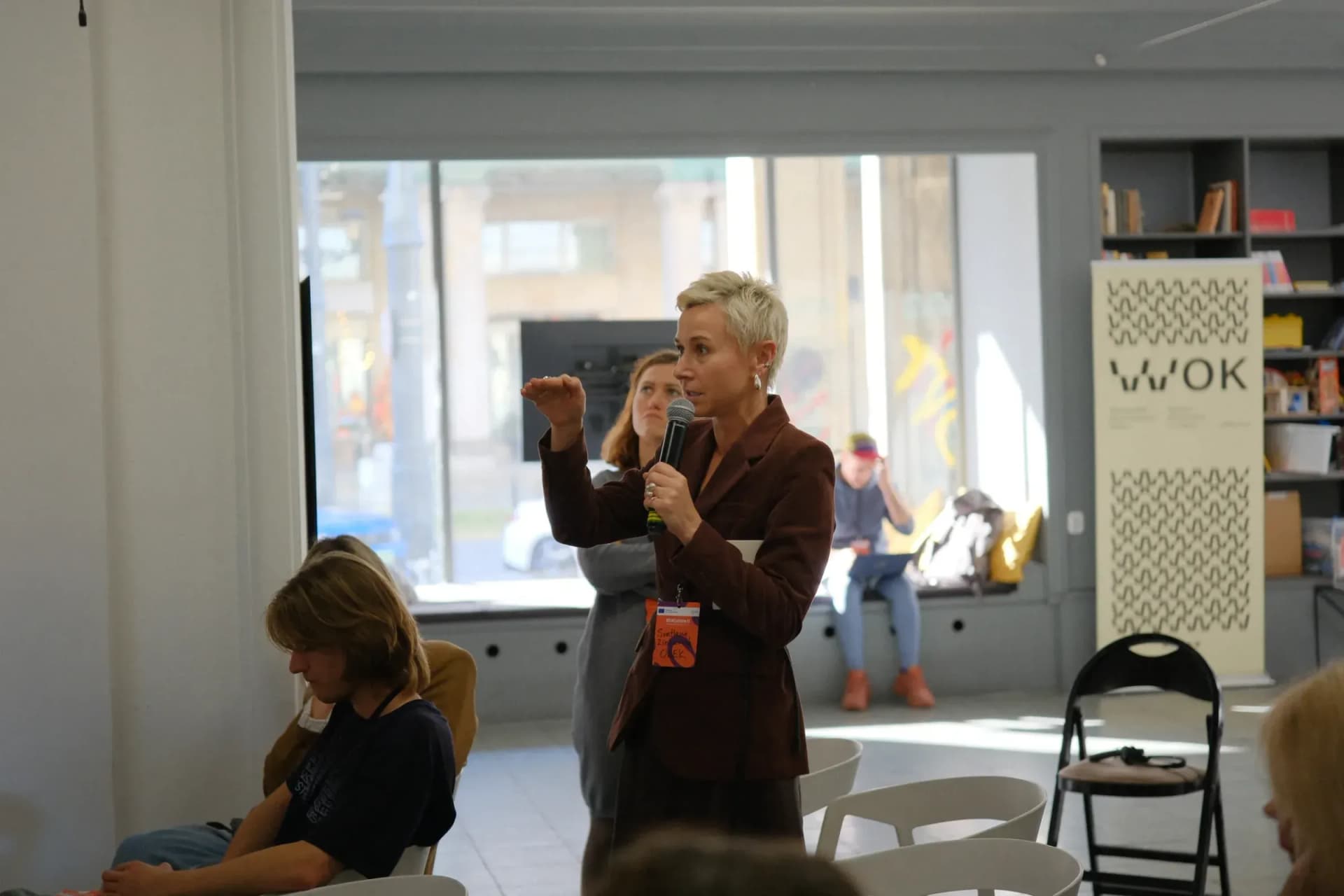
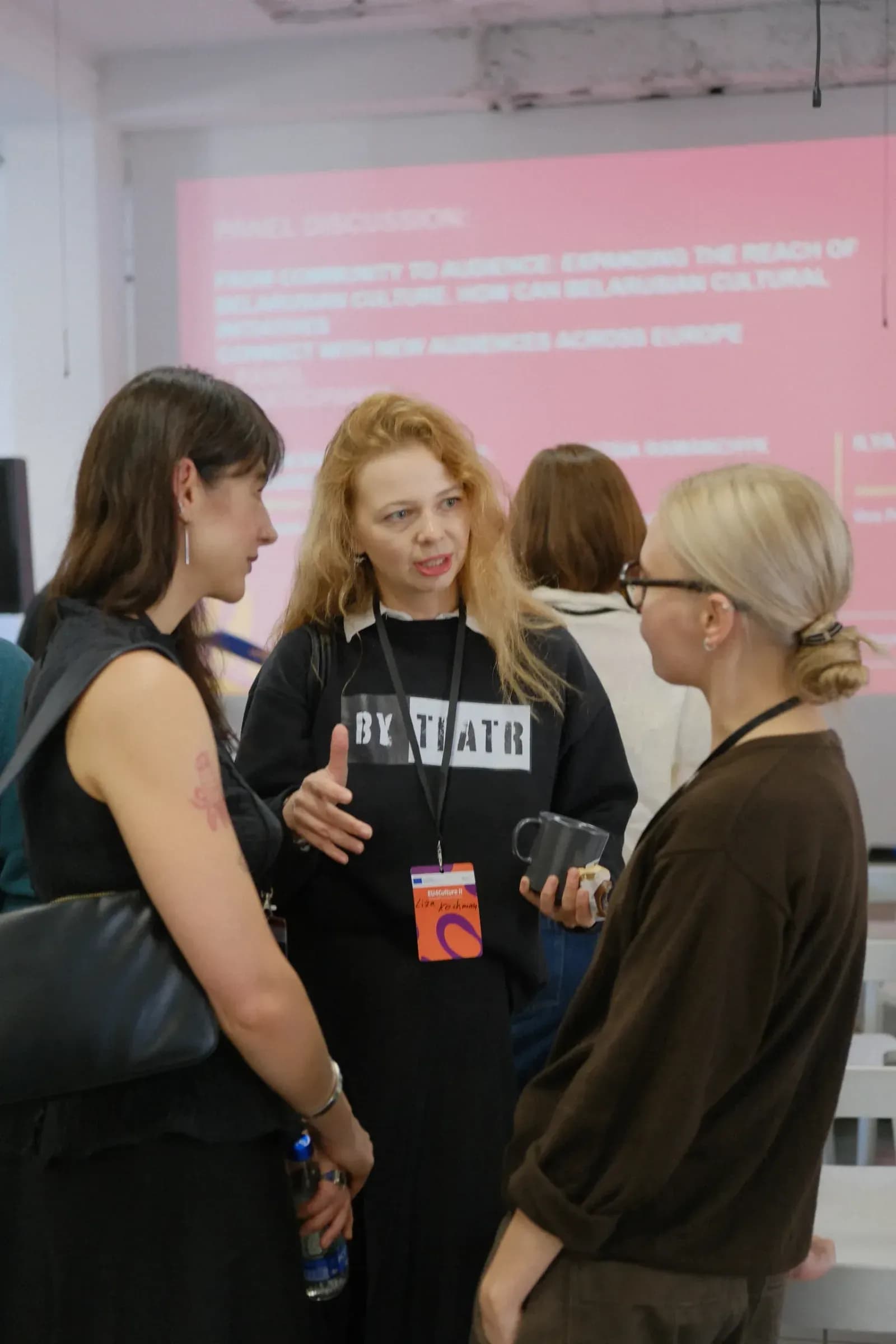
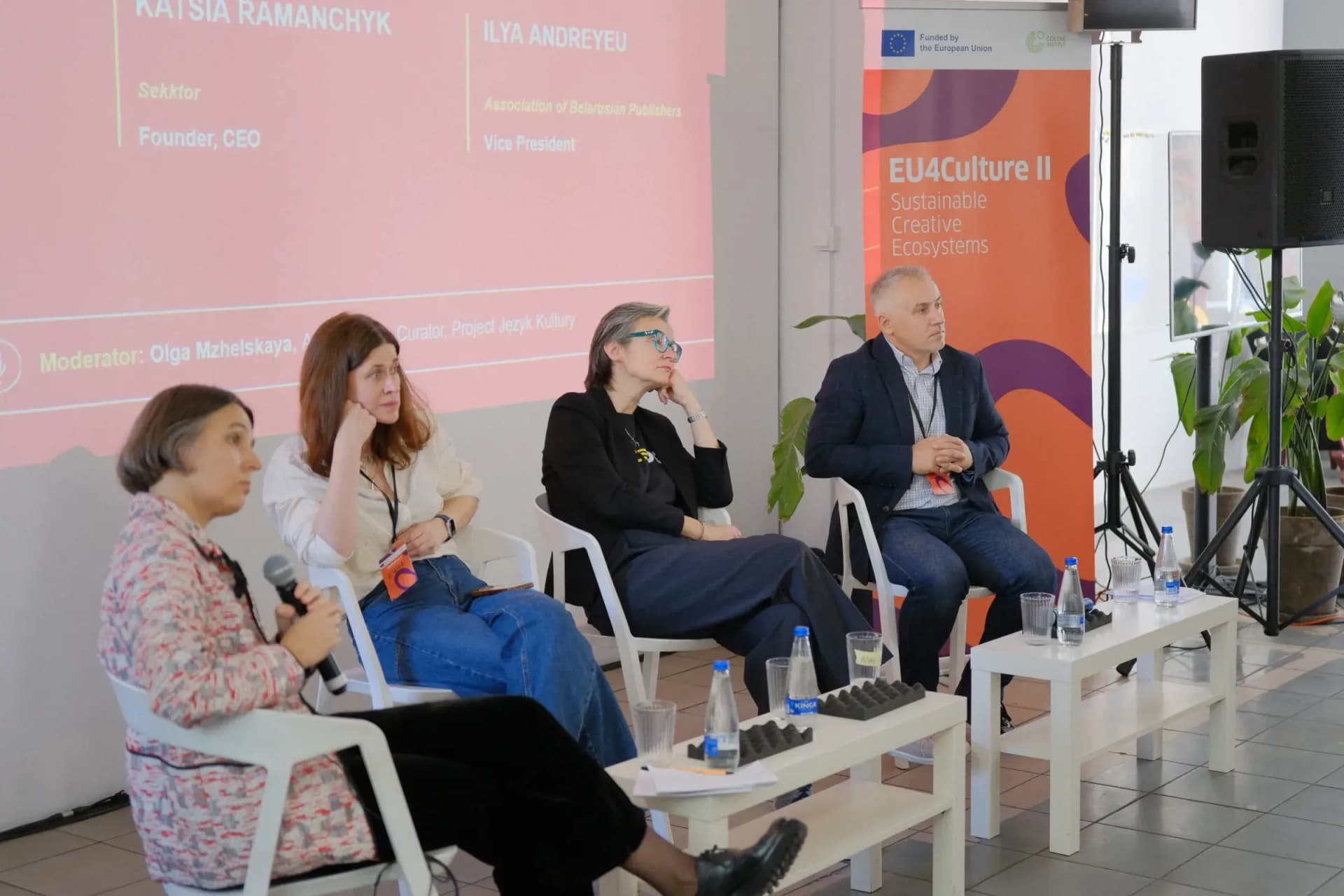
On October 16, the Belarusian part of the EU4Culture II program officially began at the Warsaw Cultural Observatory (WOK). The program's launch was marked by the forum "Beyond Exile: Belarusian Culture in the European Context." The overarching and most prominent theme of the forum discussions was the development of international partnerships and the visibility of Belarusian culture. We have gathered key quotes from the speakers.
Text: sekktor | Photo: Yauhen Kanapliou-Leidzik | Partner material.
The forum brought together 6 organizations selected in summer competitions from EU4Culture(external site, opens in a new tab), as well as representatives of Polish institutions noted for their close cooperation with the Belarusian cultural community in Warsaw.
The program consisted of three discussions dedicated, respectively, to the issues of resource sustainability, reaching new audiences, and establishing partnerships for Belarusian culture abroad. Leaving aside the topic of resources due to the preference for questions that have few new answers overall for the community, below we summarize important quotes on the issues that literally every conversation touched upon:
- How do Polish (and more broadly - European) institutions perceive the Belarusian cultural community of the latest "wave" of migration today?
- What systemic "gray zones" in Poland's cultural policy have we entered, but it is time to reflect on them?
- What “translation difficulties” should we remind ourselves of when entering a new contact?
- What is wrong with the concept of “integration” not only for the migrant community but also for the Polish one as the host?
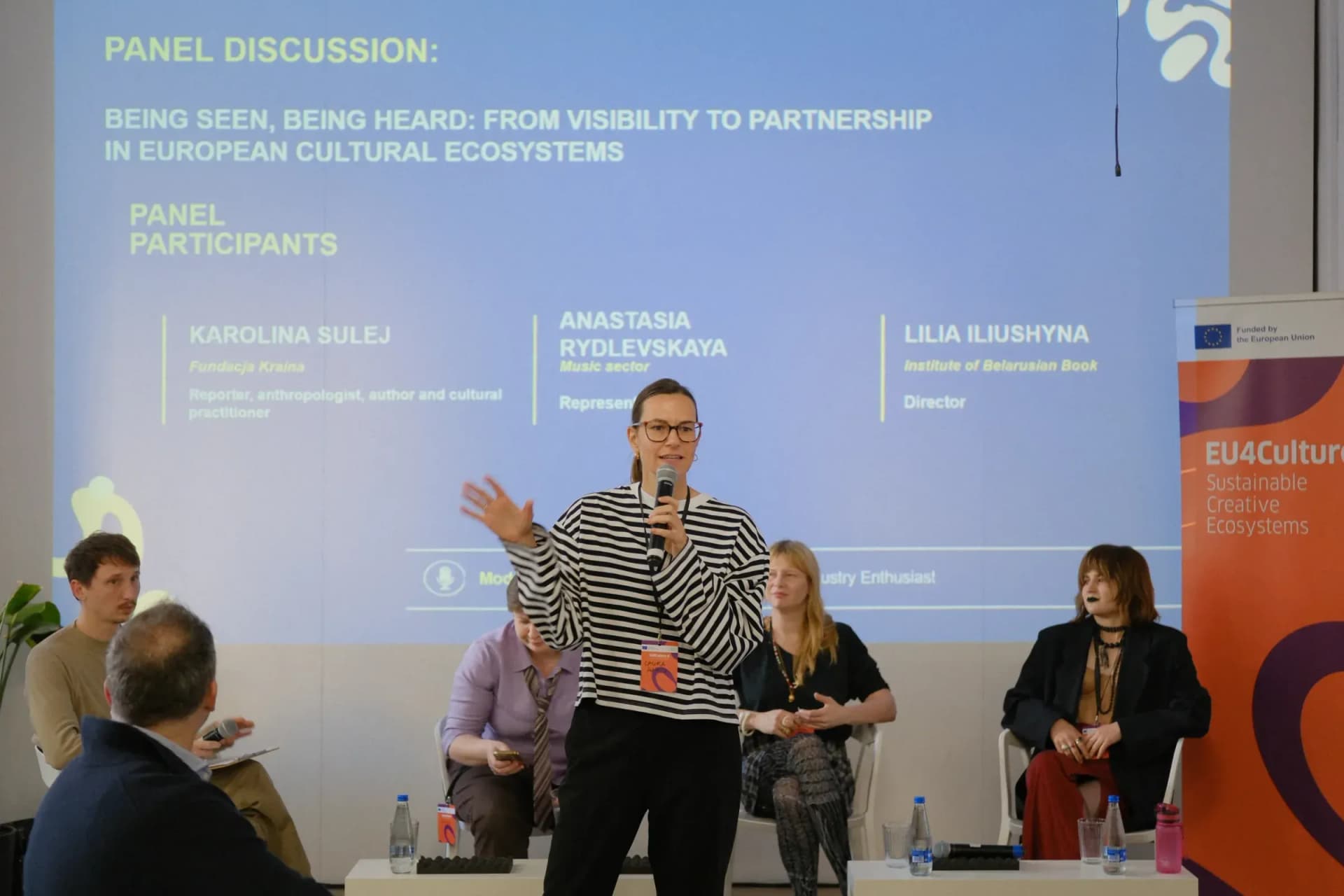
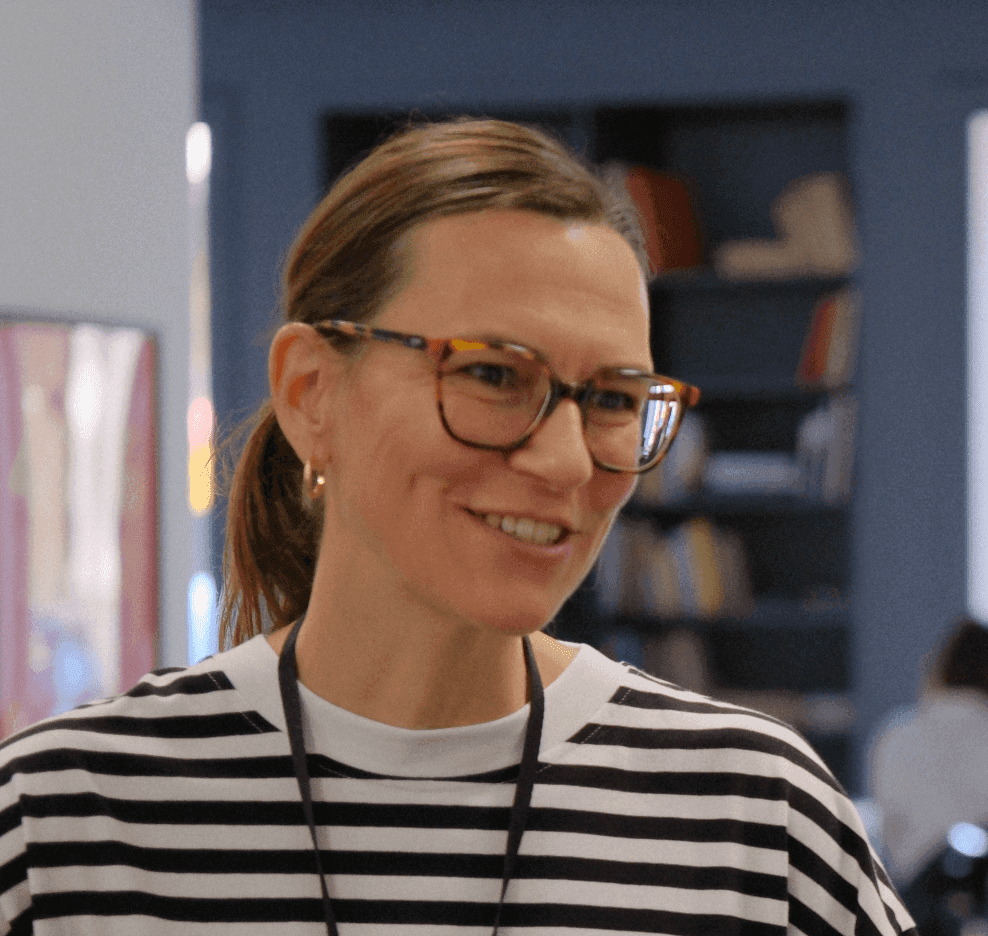
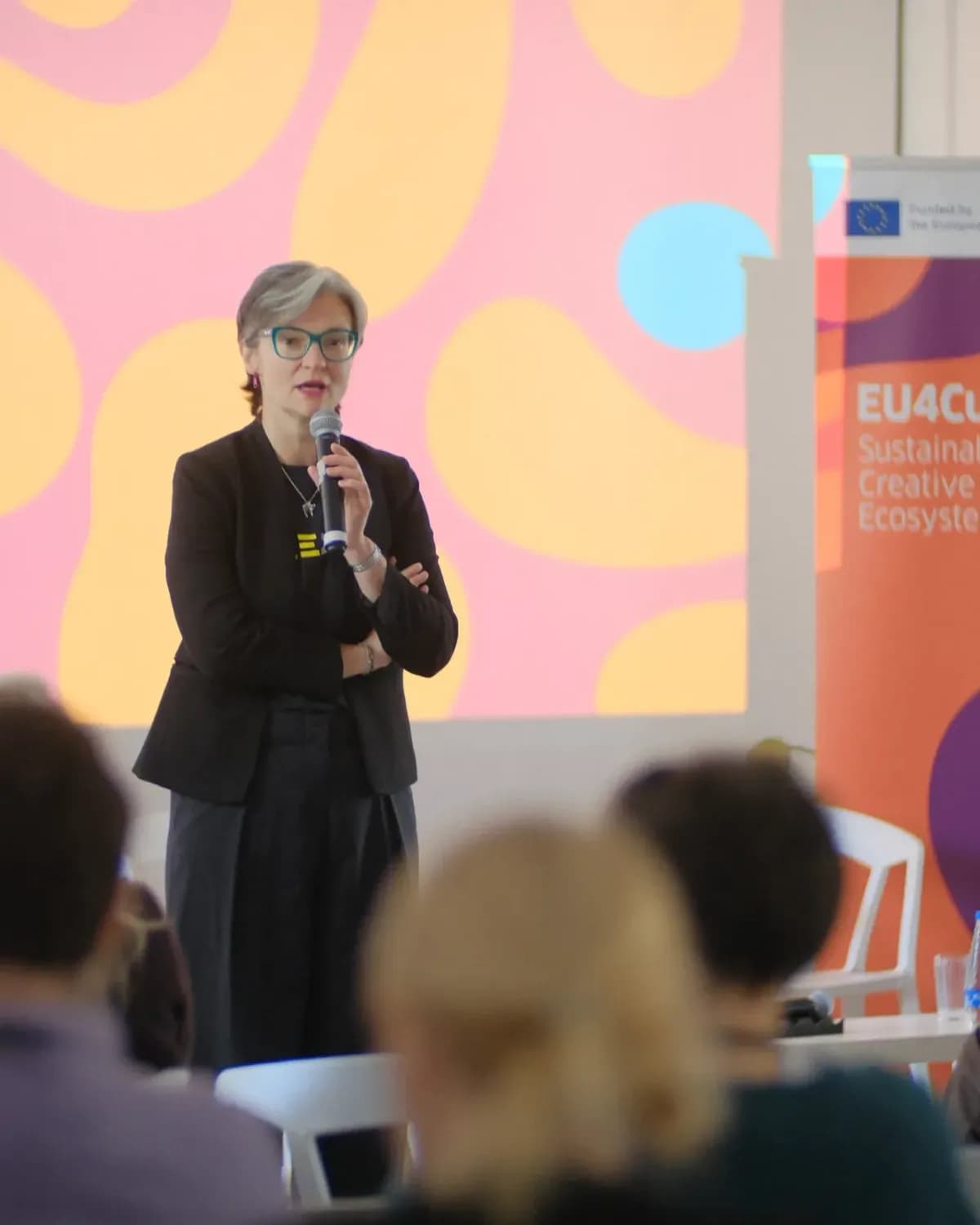
Laura Hartz (Laura Hartz), director of the Goethe-Institut in Georgia
We gave the Forum the name “Beyond Exile” not by chance. More than 6 years have passed since the events of 2020. What initially seemed like an extraordinary situation is now — I don't want to call it the status quo, – but it is already more than a moment of crisis. It is impressive how, amidst exile, uncertainty, and the loss of institutional structures in Belarus, cultural initiatives continue to create, publish, organize, and connect people.
Our Georgian colleagues also speak about this: unfortunately, many now look at how Belarusian culture has adapted, transformed, and is developing beyond the borders of the country as a lesson.
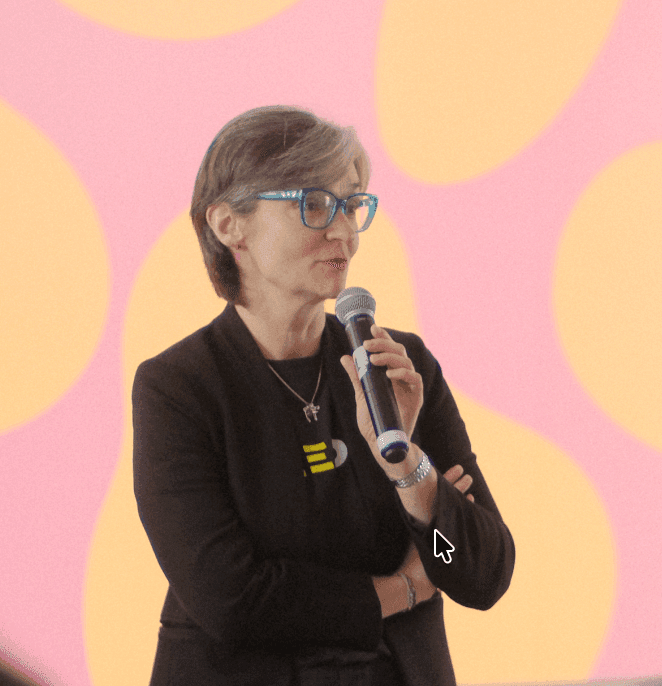
Małgorzata Bakalarz-Duverger (Małgorzata Bakalarz-Duverger), director of the Warsaw Observatory of Culture (Warszawskie Obserwatorium kultury)
We believe that the sudden multiculturalism and multiethnicity that is now happening in Poland is everyone's business, and our duty is to find ways to normalize it. We do not want to normalize the crisis — we want to normalize coexistence and joint work, primarily in the cultural and artistic sector.
Such normalization means Belarusians and Ukrainians in the teams of Polish institutions like ours. These are meetings where we invite all specialists on a certain topic — Polish, Belarusian, and Ukrainian. We conduct research and artistic projects around the theme, not the origin: we do not stigmatize each other by the country we came from.
We want to show that there are "many cultural Warsaws," and think about how to create more points of contact so that we do not live in parallel worlds. But also how to leave countercultural spaces where one can be separate, to celebrate this individuality and understand that this is normal.
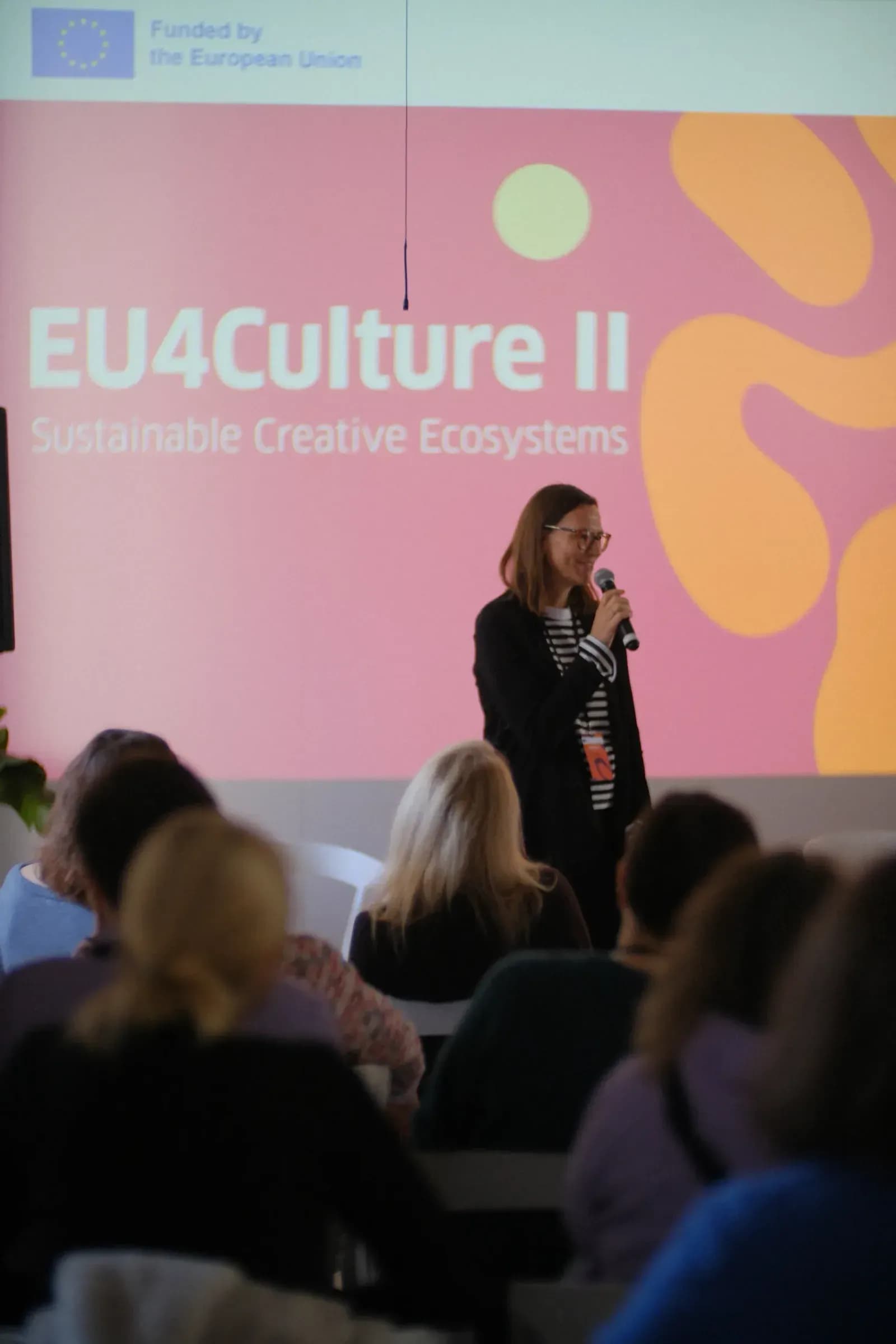
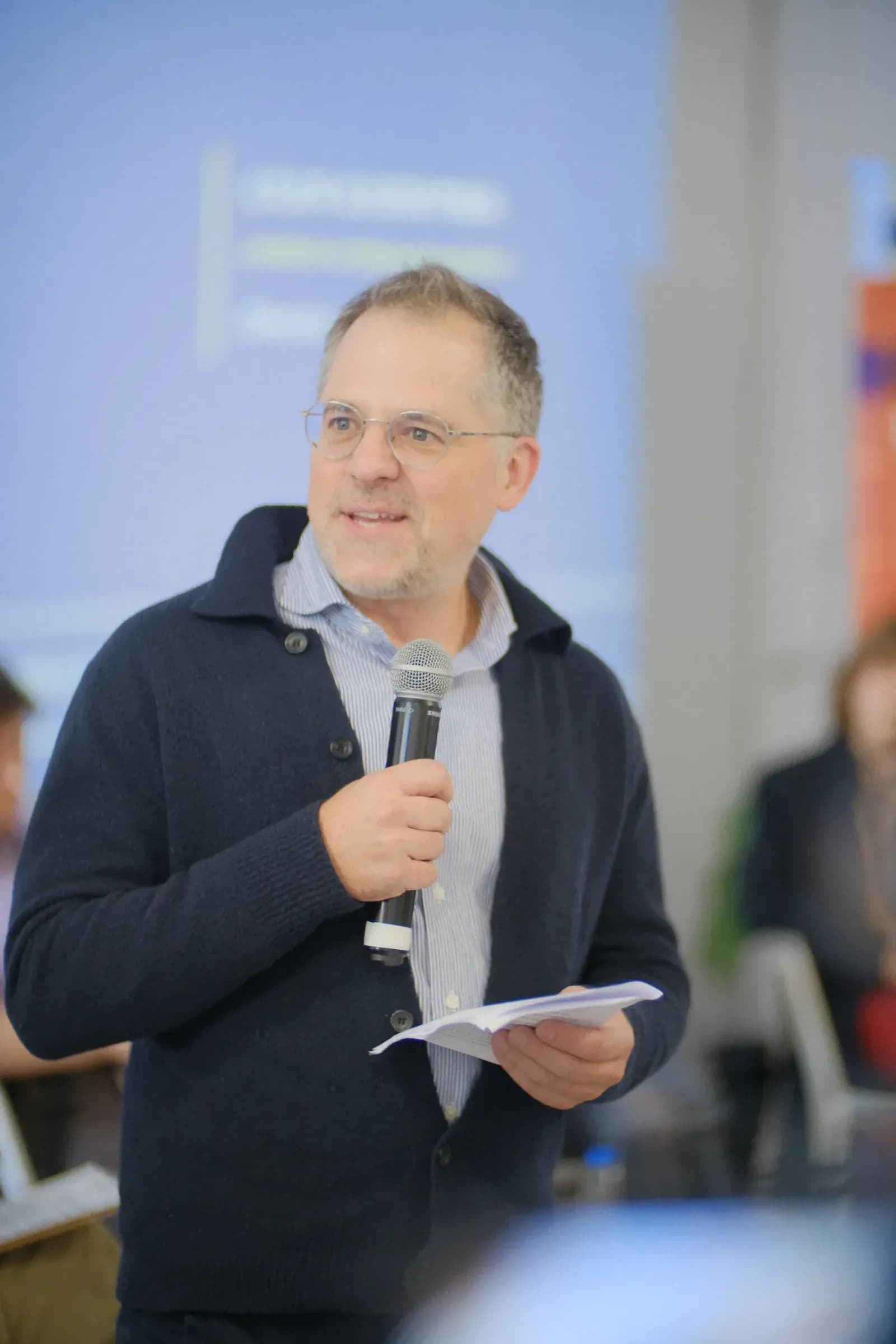
How Polish institutions (do not) see the Belarusian cultural community
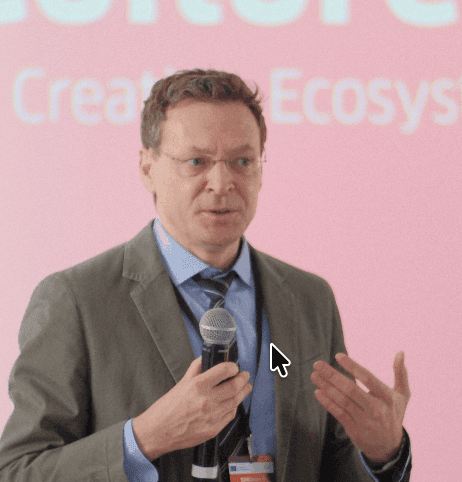
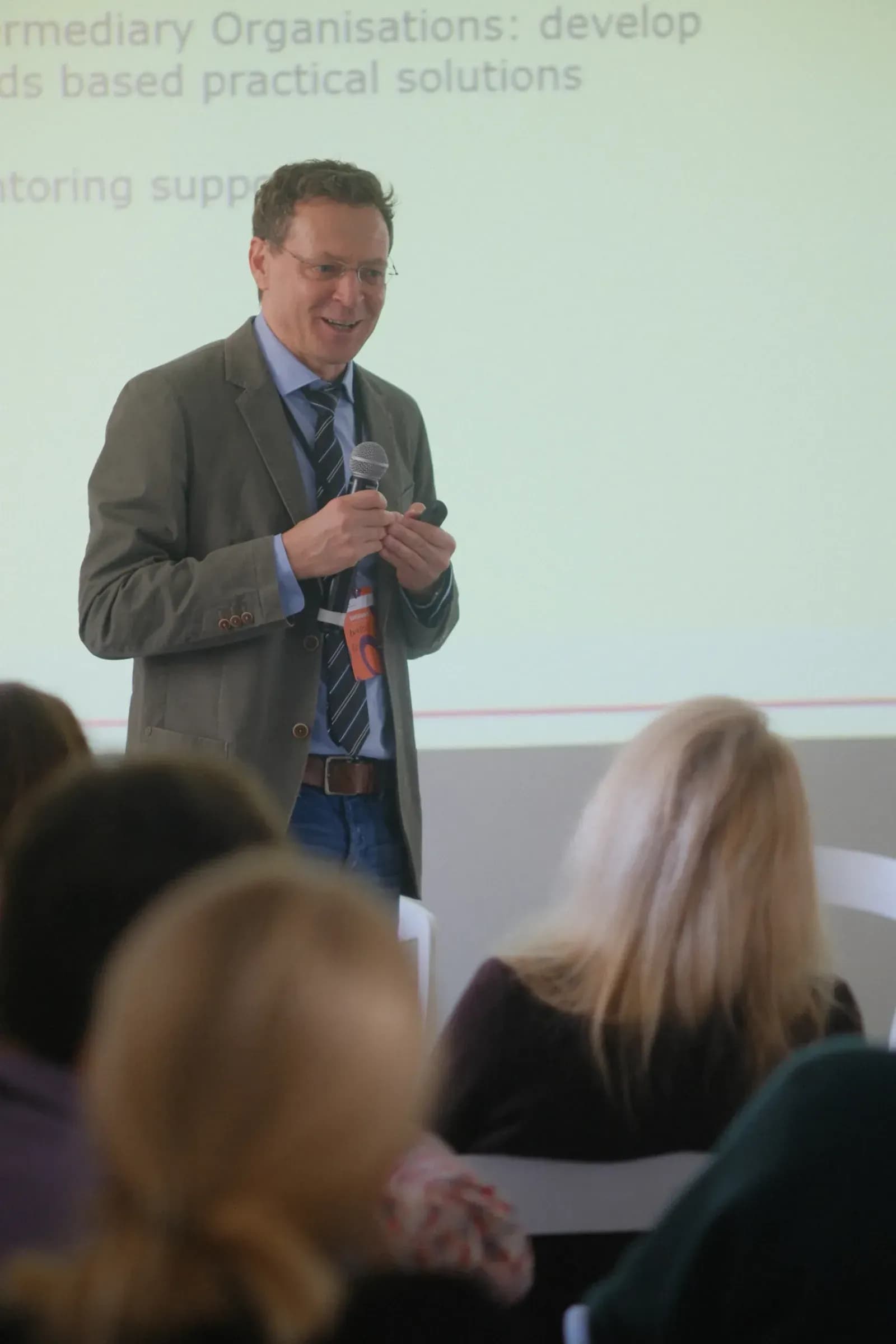
Anatoli Beifert (Dr. Anatoli Beifert), head of the EU4Culture program, moderator
Martin, you are sitting at the same table with Belarusian cultural actors and hearing their problems. Do you see them the same way — or differently?
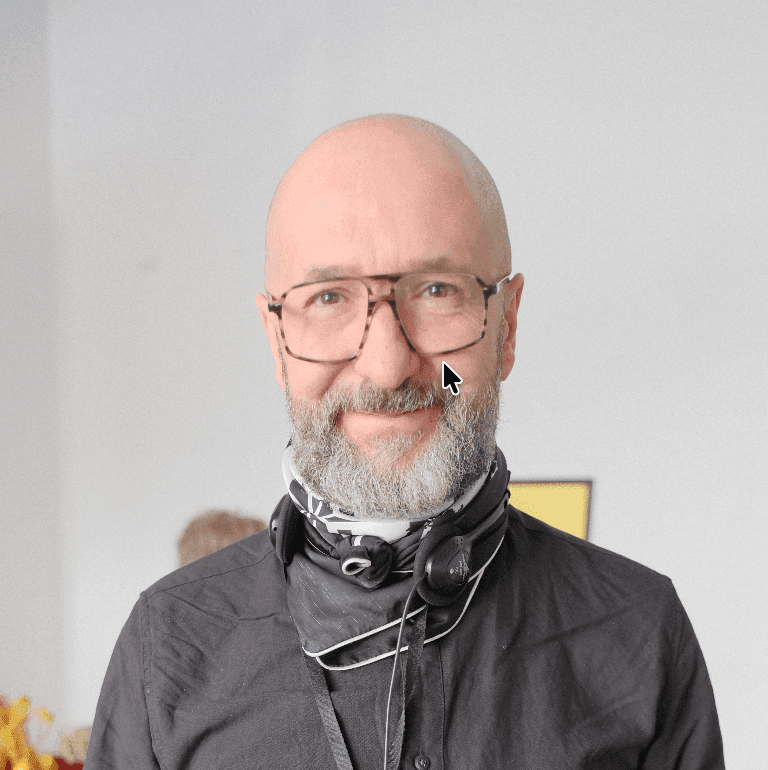
Marcin Jasiński (Marcin Jasiński), former director of the Staromiejski Dom Kultury,
(Staromiejski Dom Kultury) in Warsaw
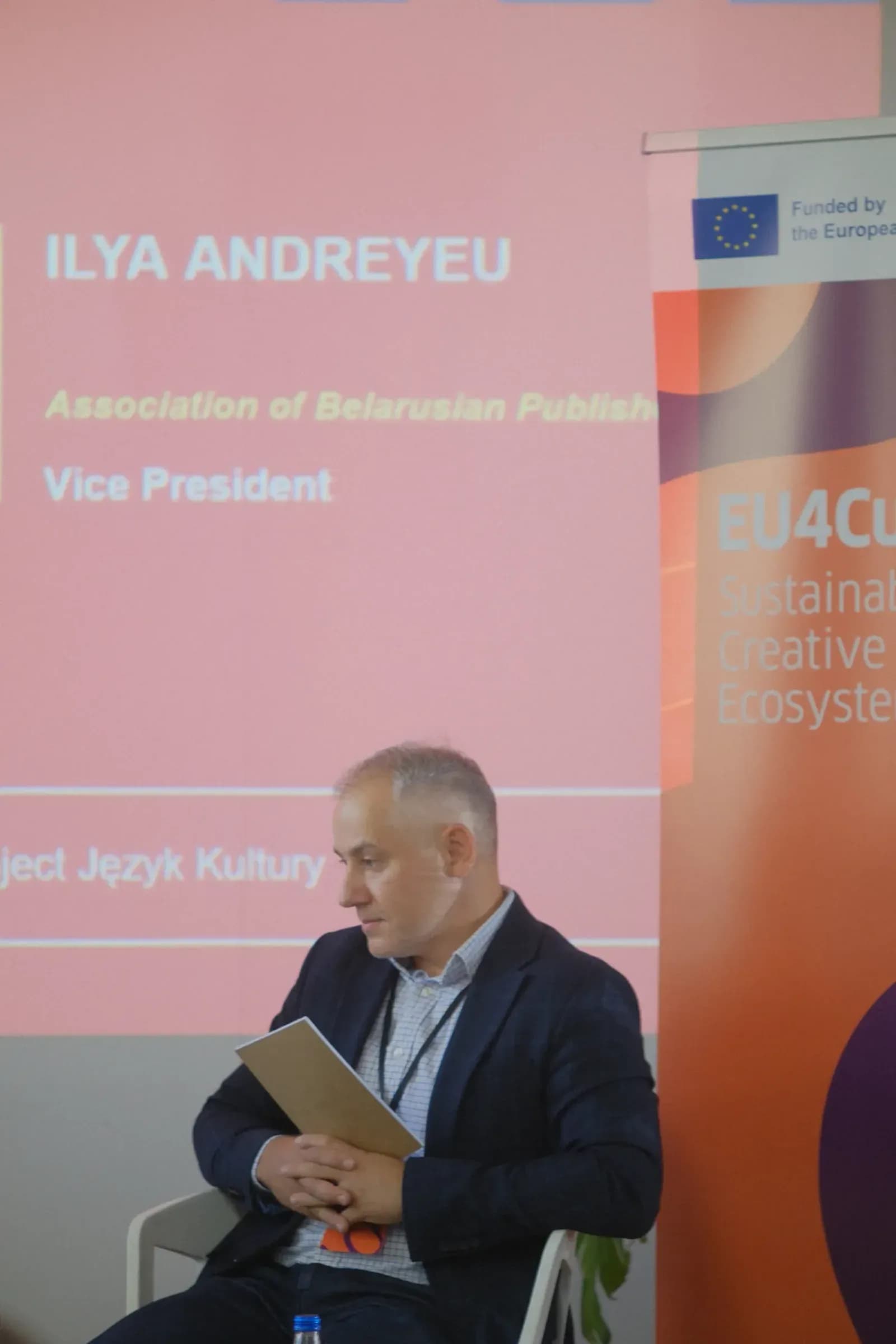
First of all, we need to change the logic: focus less on problems and see the diaspora as a resource, excuse me for the somewhat dehumanizing word. The Belarusian diaspora, in my opinion, is excellent at self-organizing and knows how to rise from the ashes. I even think that the experience in this area in the Belarusian diaspora is greater than that of European organizations.
But the diaspora finds itself in a situation where it has to deal with the systems of the countries where its members live. And Poland, against the backdrop of Europe, is not the country where the system is simple, friendly, and where there is a lot of money. In large cities, the non-governmental sector receives about 10% of funding for culture, while 90% goes to the public sector — institutions and their maintenance. Sometimes, a grant competition in Warsaw has a budget of 800 thousand, while applications total 7–8 million.
The answer is simple: we need to do this better than Polish organizations. Which is quite difficult for diaspora organizations. And the issue is not always about unfriendliness — it is also the imperfection of the system, which is not adapted to support non-public and non-institutional.
But there is also a great strength of the Belarusian diaspora: it is scattered all over Europe, and actually all over the world. This is a network of people who work, for example, in institutions across Europe. It seems to me that the system of this network is not visible.
And another systemic oversight. In Poland, the Belarusian language is protected as a minority language. But where does this minority, living in Podlasie, get cultural content if not from the Belarusian diaspora? Belarusian is a language that is under threat in its own country. Seeing this at the Polish and European level may be one of the ways to visibility of Belarusian culture.
Anatoli Beifert: What prevents the transition from occasional cooperation to strategic and long-term?
Marcin Jasiński: This is a very difficult question. It seems to me that [Polish] institutions are increasingly choosing a short-term strategy rather than a long-term one, due to the socio-political reality. The second is the fear of public evaluation, especially in institutions that are very prominent on social networks. Public sentiments in Poland strongly influence the choices made by institutions.
And it would also be interesting if institutions that proclaim beautiful slogans (empathy, partnership, and other trendy words) implemented them in practice. Here personally I see a certain regression. It's not just about the fact that we suddenly do not hang a flag on the building or do not translate our materials into other languages. It's also about the fact that we do less openly, which would create a shared presence with people who came to Poland.
I try not to use words that carry certain violence, such as "integration." For the development of cooperation, on one hand, accurate data is needed: how many representatives of the diaspora live in a certain locality or commune? And on the other hand, institutions need to share power and trust the entire community, rather than just ordering services from individual artists or craftsmen.
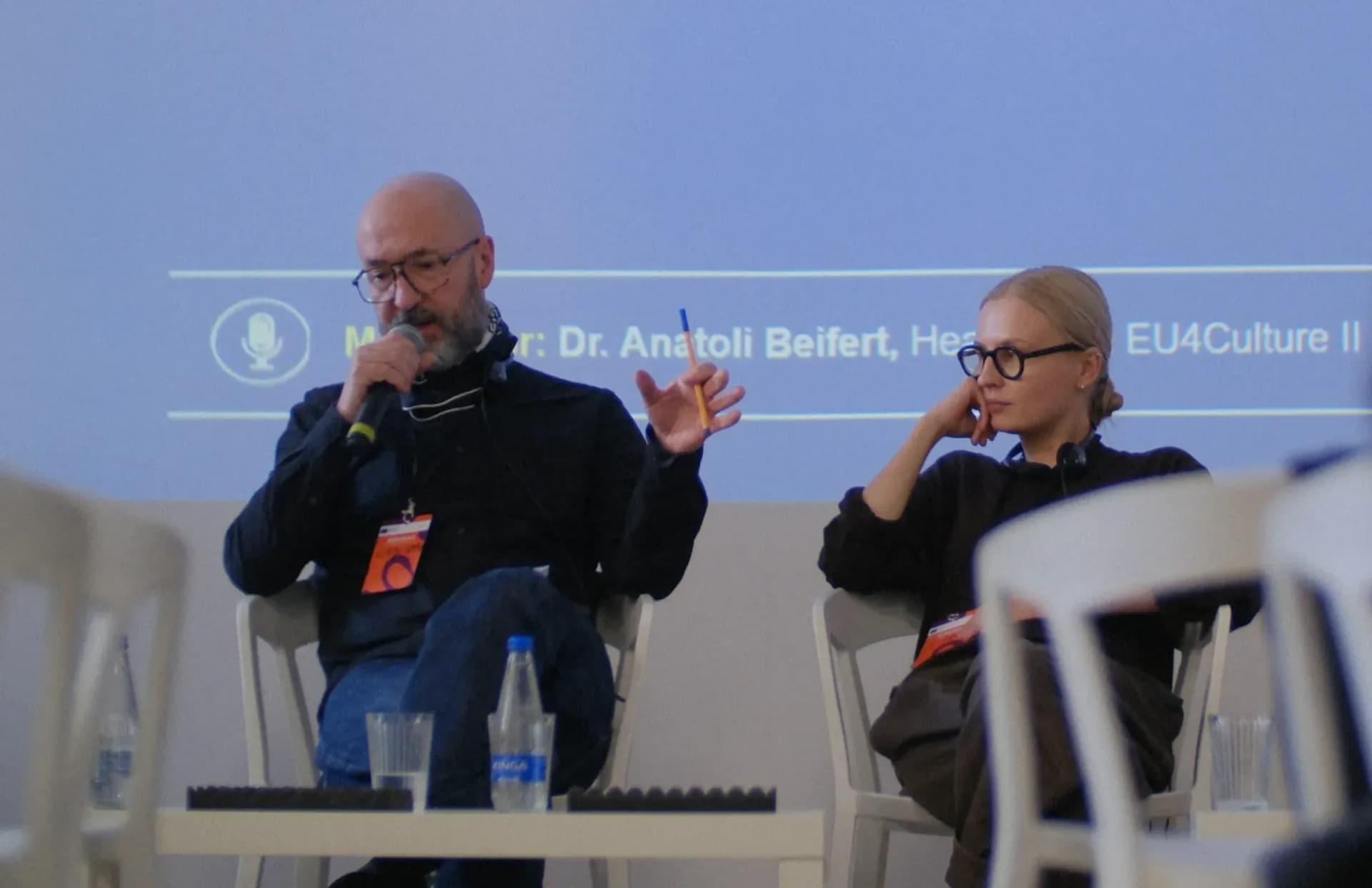
Marcin Jasiński: 8% of Warsaw residents have been to a cultural center at least once in 2025 — this is about 100–120 thousand people. Only in ZUS last year, over 50 thousand Belarusians were registered, but I believe there are actually twice as many. Therefore, it would be good if the local government bodies of all Polish cities with a Belarusian diaspora began to treat them as city residents who are entitled to certain services — including in their own language.
But according to their principle, Polish institutions are not ready for any other model except for the curatorial one. A typical institution is a curator who knows exactly what they want and leaves no room for competitions or open formats. However, thinking systematically, for diasporas like the Belarusian one, this is absolutely key.
Anatoli Beifert: Do Polish organizations see any benefit in potential cooperation with Belarusian cultural figures?
Małgorzata Bakalarz-Duverger: We conducted an evaluative study of the residency program of the Raszewski Theatre Institute. The institutions that hosted the creators had no doubts about the benefits they received. Firstly, a new audience: when the resident presented a performance, people who had not previously visited the theatre came. Secondly, very specific new working techniques.
Often, Belarusian concerts take place in rented halls of theatres, and the theatres do not promote them at all: there is no information, no posters. And the Polish audience will not come to such a concert, although they could.
I strongly encourage to rather collaborate with Polish institutions, rather than renting space from them. When we collaborate, relationships develop, but when we rent — we are just clients. <...> Emotional relationships [waves of crisis] worked well, but not for long. Professional relationships can last longer. There is now enough professional “register” to synchronize and work together. And the audience will come for that.
Olga Mzhelskaya: Sometimes I hear from Polish colleagues that they collaborate with Belarusians, but Belarusians do not show any… warmth. I think we need to learn to be a bit warmer. It’s not that we are ungrateful — it’s just that we hold ourselves together so much that we forget about normal human relationships.
Małgorzata Bakalarz-Duverger: The essence of public institutions is that they exist on taxpayer money for all residents of the city. If the creation of a space for the diaspora does not lead to openings for other groups, including Poles, it will be hard to find an argument for the institution to continue this work.
When we came to the Bureau of Culture and said we would be researching diasporas, the director said to me: "Belarusians came to me and wanted a cultural house to be made for them, but I can’t." I said: "No, we are talking about something else: so that all these Belarusians, Ukrainians, and Georgians can do cool things for the residents of Warsaw. These are new residents of Warsaw». — «Oh, then that’s fine.Therefore, if we want to have a Ukrainian house — we will establish an association and rent a space. And if we want to have various interesting places where something is happening, — we go to institutions and talk about partnerships.
Reaching out to new audiences...
Olga Mzhelskaya: It seems we are currently in a paradoxical situation. On one hand, there has probably never been such a number of Belarusian events, Belarusian figures at festivals, Belarusian exhibitions around the world in the history of Belarus. But does this visibility really grow into a sustainable presence in European life? By what signs can we understand that we are going beyond the diaspora?
Katsia Ramanchyk, head of sekktor.online
Yes, it seems that presence at such international events is the first thing that can be "measured". Before our conversation, I monitored the publications of the section "Cultural Front"(external site, opens in a new tab) from Reform.news: over the past two years, this media has recorded at least 56 awards. In my feelings [from scrolling through social networks], this number could be twice as large. We really have something to be proud of, but we have little summarizing analytics — to remind both ourselves and external partners of the level we are capable of.
And an important caveat about audience development: many of us face the task of retaining the audience we have, especially considering the internal Belarusian one.
Małgorzata Bakalarz-Duverger: It is worth asking ourselves the question, what is this new audience? Perhaps not all Belarusians have attended the events you love? I find comfort in the example of New York or Amsterdam: there are many events organized by groups from different cultures, and they are not necessarily for everyone. It is normal not to measure success by how many ethnic groups are sitting in the hall — because that would drive you crazy. Our new audience could simply be another segment of the Belarusian audience, and that is normal.
In general, about what Belarusian culture are we talking about? About good literature and good contemporary art? Or about the tradition and heritage that we want to showcase? It is worth "unpacking" this for ourselves, because such complementary, mutually enriching cooperation liberates: you need such partnerships, such an audience, and such a strategy, I need different ones.
...to maintain and develop the Belarusian audience
Illya Andreyeu: Last year we conducted a study of the audience and the landscape of publishers in exile. About 600 people participated in the survey. The main group is aged 25 to 45, which makes up about 50% of our audience. The portrait of a reader is a person who strongly believes in the book, trusts publishers and authors, and expects that this trust will be justified. Responses from Belarus accounted for about 10-15%, but the core is the Belarusian migration in Poland.
One of the cases that did not justify itself is children's literature. We probably did not foresee how quickly Belarusians would integrate into the Polish community. The result is this: books in Belarusian are not being purchased for children; children read books from school. And another sad point: the audience of the Belarusian reader is generally shrinking.
<...> Theoretically, we have a window, possibly in the next 10-15 years. History shows us that integration is the other side of assimilation. The second generation of Poles who emigrated to France rushed to become local, and only part of the third turned to their roots. Most likely, we will have the same.
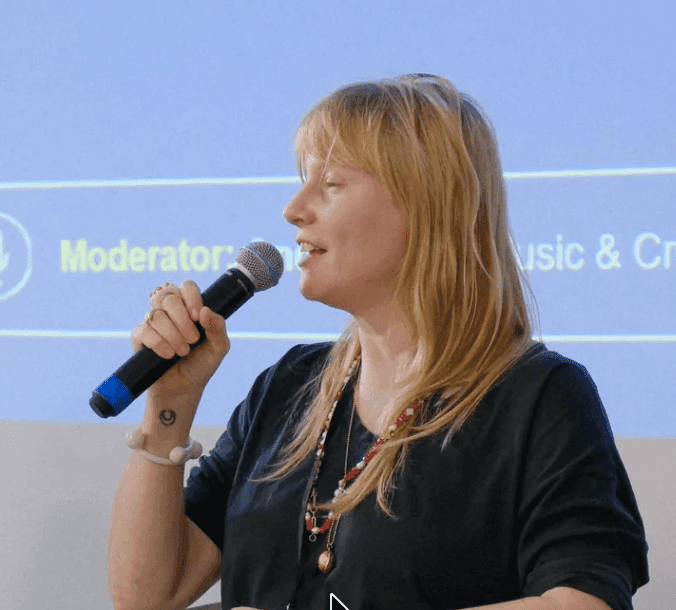
Karolina Sulej: «Integration> for me it sounds like something we are obliged to do, and there is no joy in it. I would say 'to introduce'. The best way to introduce the Polish environment to Belarusian culture is to showcase individuals, their creativity, voices, and narratives that you won't find anywhere else.
We [at the foundation Kraina] are trying to mix as many usually closed groups as possible so they can see each other and connect. Alone, you can do nothing. This is not only a Belarusian effort — it is also a Polish effort. We need to see each other, but it is not an obligation — it should be an enthusiasm.
We use the language of art, fashion, and cuisine. This is a language for everyone: we all eat and we all dress. People just buy things and remember: 'Oh, what an interesting designer! From Belarus? I need to learn more about this!'. Thus, piece by piece, artist by artist, we introduce people to a whole community.
Translation difficulties: from announcements to cultural codes
Katsia Ramanchyk: In the sixth year of emigration, we can at least start translating our announcements and building communication around projects beyond the confines of the specific project for which we received funding. Living in project logic, many of us forget about the audience we need in the long term.
Olga Mzhelskaya: There are also reverse examples. Aliaksandr Adamau recently had an exhibition where the texts were in Polish and English, but there was none in Belarusian. It's good that they reacted quickly. But in attempts to reach a new audience, we sometimes forget about our own.
Małgorzata Bakalarz-Duverger: Last year we organized a meeting for non-Polish-speaking organizations and invited representatives of the city government to talk about grant opportunities. Very quickly we became translators — but not so much from Polish, as translators of contexts. What the "quest on Powązki" is — a collection of money at the cemetery — is not at all obvious. Poles did not have to do this for 80 years: for three generations everyone spoke the same language, watched the same films, had the same jokes.
The Belarusian collective or artists must take care to be understandable: rather "great literature", not "Belarusian literature". But the Poles who receive them must also try to imagine how to move forward. This requires patience and practice.
Karolina Sulej (Karolina Sulej), journalist, anthropologist,,
writer and cultural activist, representative of Fundacja Kraina
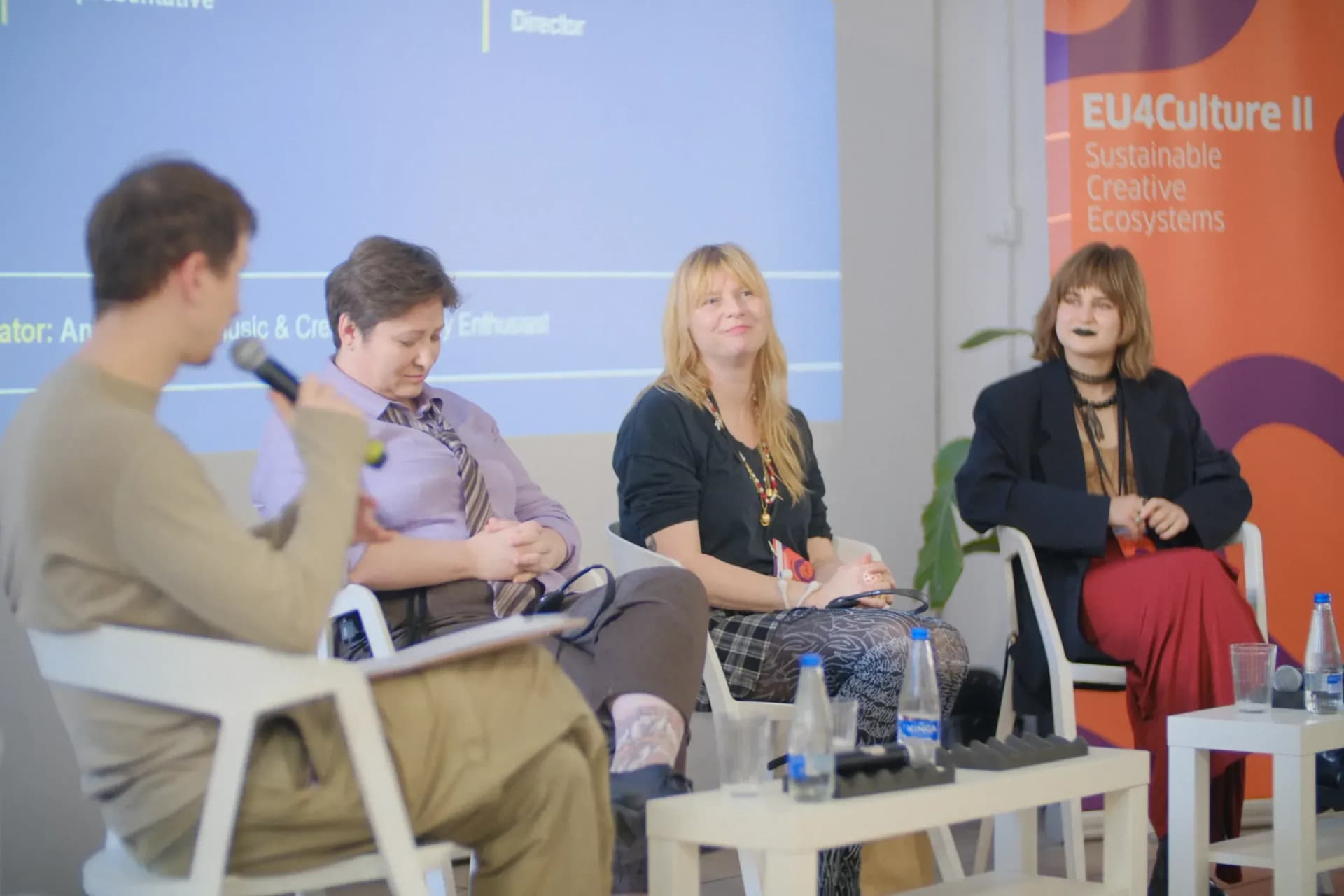
<...> I believe that Poles should learn Ukrainian and Belarusian. Not only Belarusians should learn Polish — we should communicate together. For example, in Poland, I do not see a single ambassador of Belarusian books. Do you know anyone who will tell you about Belarusian authors? No! All that exists are Instagram and social networks. But I want more.
Ambassadors of Belarusian culture do exist
Illya Andreyeu: <...> Making a good translation is 10% of the job. But what comes next? Translations of Belarusian literature are not done by major Polish publishing houses — except in cases where there is an award, like with Svetlana Alexievich. You can name five or six Belarusian authors translated into Polish. These books exist, but are they present in the Polish space? I think not. There is presence, but there is no integration or interest.
<...> Stories of personal successes are always very important, especially in literature. There are ambassadors. Andrei Khadanovich presents Polish literature to the Belarusian reader as interestingly as Belarusian literature to the Polish one. This is an excellent example of cultural dialogue.
Often, as in the story with Alhierd Bacharevič, there is a specific person — an ambassador, a translator, who convinced [a certain publishing house] that it was necessary to translate. <...> And the translations "What are you going for, wolf?" Eva Viežnaviec — are a great success. <...> There was a mobilization of many people who acted as ambassadors, and this text was translated into many languages.
Olga Mzhelskaya: One of the beautiful examples — how the book of Alhierd Bacharevič “Dogs of Europe” was published in Polish. Just then, there was Warsaw Gallery Weekend, and the Belarusian-Polish performer Jana Shostak took this bright book in translation and walked around with it at events like an accessory. Many people asked her: what is this? She became a promoter of Belarusian culture.
Małgorzata Bakalarz-Duverger: When in the study of participation in culture we spoke with the parents of Belarusian and Ukrainian children, they very often said that they wanted to show their classmates a Belarusian author or author on the shelf in the bookstore. Not a direct "get to know my culture, learn about my folklore", but rather "take an interest in my literary art". This is a very important gesture. And such "accessorization", the trend around the book — a super fine idea.
But the adjective "Belarusian" is important here. When I buy a book Mario Vargas Llosa, I buy it not to learn about Peruvian culture, but to read great literature. When I read Alexievich, I read her not because it is a Belarusian book, but because it is great literature. Maybe the answer is simple: good books are interesting?
Olga Mzhelskaya: There are institutions that promote their national cultures. Goethe-Institut promotes German culture, Adam Mickiewicz Institute promotes Polish. We do not have such an institution.
An important thing that I see in the Ukrainian community: Ukrainian cultural figures work in various institutions in Poland and other countries. If someone from them works in the education department of the Museum of Contemporary Art, there will be tours in Ukrainian and workshops by Ukrainian artists. Because there is a person in the team who will suggest that there is an interesting Ukrainian artist just for the exhibition that will be held in a year. We need to launch ourselves into Europe in the same way – like mycelium.
Favorite theme for an encore
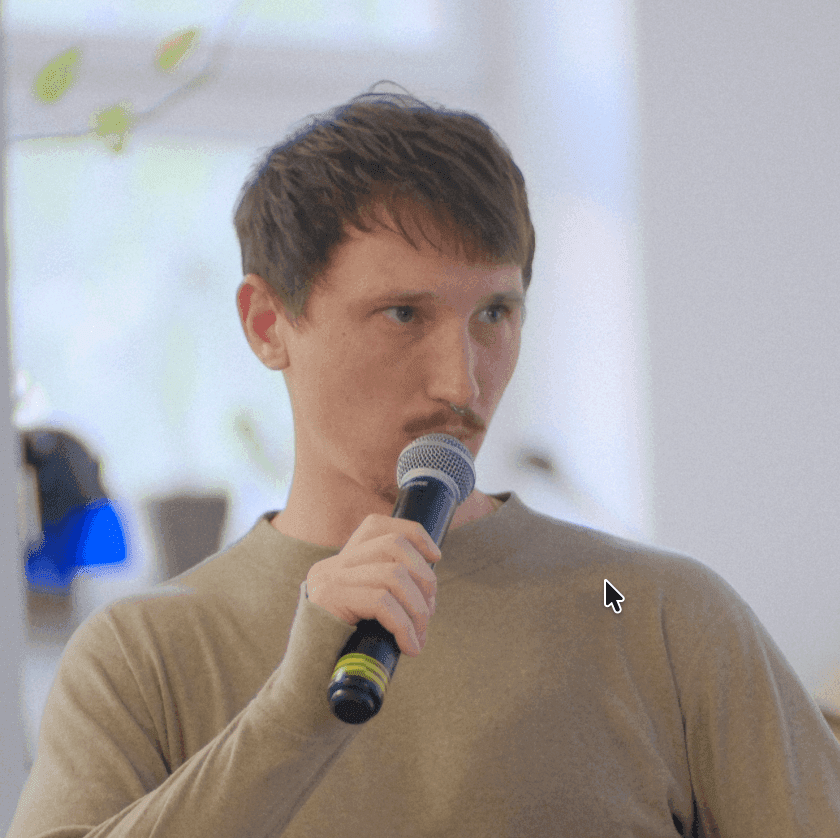
Andy Novak, enthusiast of culture, moderator
Are Europeans only interested in us when we talk about politics and trauma?
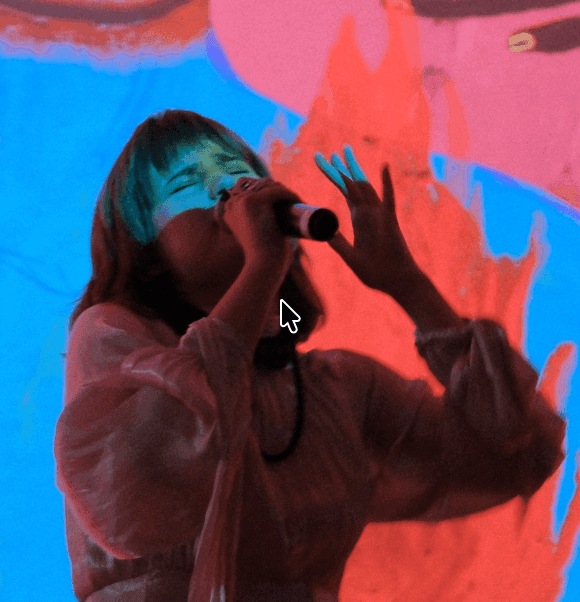
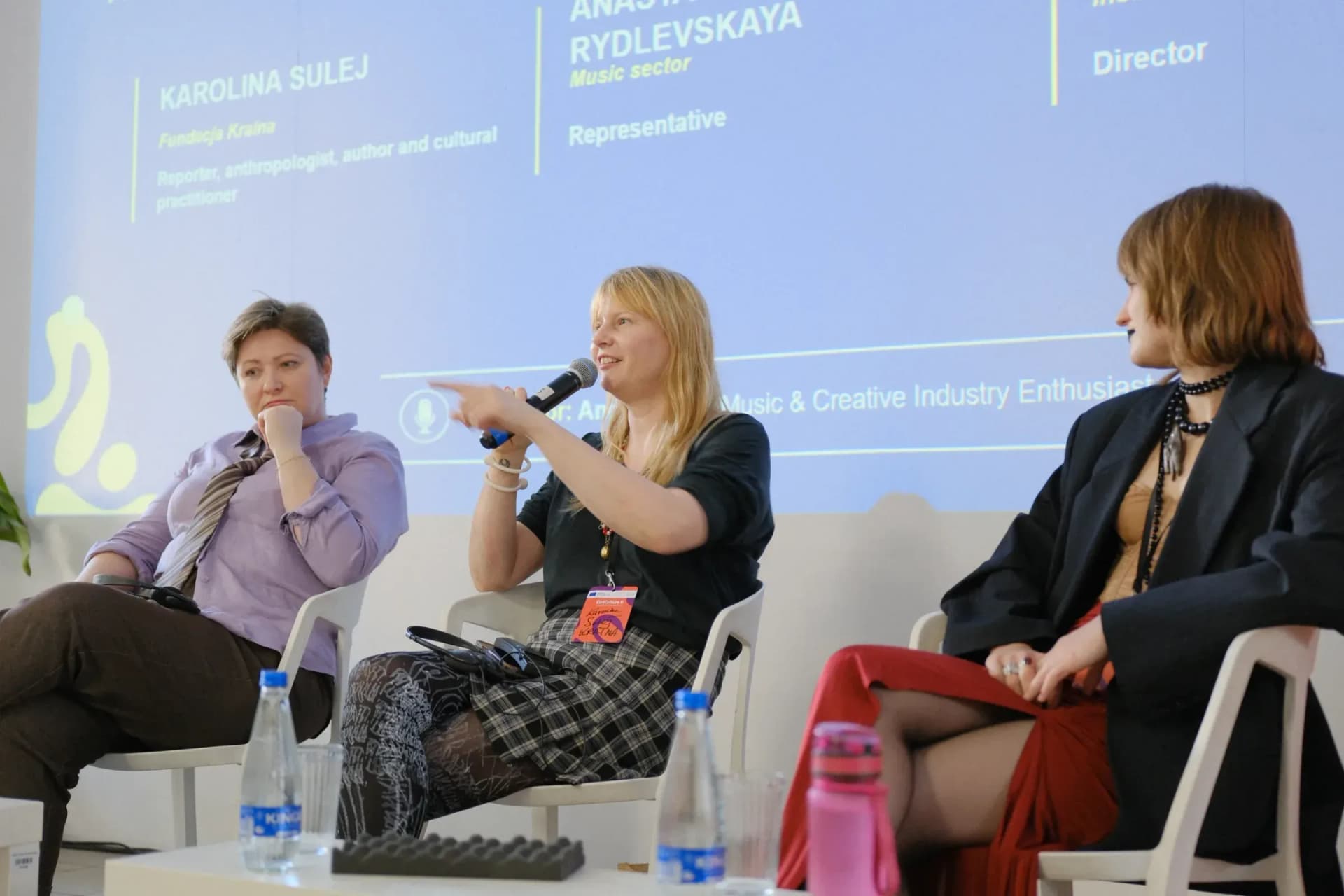
Anastasiya Rydleuskaya: I have no agenda. I create because I can't live otherwise: I write songs about feelings, love, breakups, the loss of a loved one, bipolar disorder. People have approached me not with "oh, poor Belarusian," but as a partner: "We are really interested in what you do, let's collaborate."
Karolina Sulej: Belarusian artists show the Polish audience that it is possible to translate their pagan heritage, connection to nature, old myths and fairy tales — and make it interesting for Poles. Just a few years ago, Poles were not interested in their heritage. Then Ukrainians and Belarusians came and said: “Hey, this is really interesting!” You show us how to realize again that Poland was multicultural. Let's treat this as a gift, not as a problem to be solved.
Trauma no unwanted. It simply should not be exploited. It all depends on the perspective: the conversation should be about individuals and survival – life goes on. <...> The Belarusian artists we work with use the language of craft, villages, witch stories and connect this with modern feminism. It's not about trauma, but about reclaiming one's power, about freedom, about the celebration of femininity and sisterhood. A completely different narrative, because it's about healing.